How do you rebuild a springhouse in the floodplain of a creek that has already damaged it more than once? That question is behind almost every decision in the Chick Springs master plan. It explains why the springhouse will come back as an open gazebo. It explains why parking will be a short row of spaces along Dan Bull Road. It also explains why the pool that a generation of Taylors residents remembers will become a garden.
Taylors TownSquare, a nonprofit founded in 2014, has owned the 8.62-acre property outright since it was donated in July 2024. Arbor Land Design's Jason Smit presented a four-phase master plan at the Taylors Ministry Center on March 26, 2026. The park in that plan is smaller and quieter than any earlier version of Chick Springs. Lick Creek set most of its limits.
Two Centuries of Rebuilding on the Same Wet Ground
Written references to the spring go back to 1802, when John Drayton described it. David Ramsay wrote about it in 1809 and Robert Mills in 1826. Dr. Burwell Chick opened a resort at what was then called Lick Spring in 1840. By 1842 his hotel had 60 rooms, and he had sold 20 lots for cottages. After his death in 1847, his sons Pettus and Reubin bought the resort. In May 1854, Alfred Taylor built and plastered the octagonal springhouse whose brick foundation still sits on the site today.
The full record includes a mortgage on the property dated July 31, 1857, which named 12 enslaved people as collateral: Stephen, Diana, Charlotte, John, Charles, Grace, Matilda, Robert, Grace, Rose, James and John. TownSquare read those names aloud at the March gathering. Its stated reason was that "reckoning honestly with the full history matters."
Fire, water and the businesses that kept moving in after each loss explain most of what happened next:
| Year | What happened at Chick Springs |
|---|---|
| 1862 | The first hotel burned on November 4 |
| 1885 | George Westmoreland built a replacement hotel |
| 1903 | J.A. Bull acquired the resort |
| 1905–06 | Bull expanded a 16-room inn into a 119-room resort |
| 1907 | The resort burned in December, with a reported $40,000 loss |
| 1913–16 | J. Thomas Arnold ran a 100-room hotel and Chick Springs Ginger Ale |
| 1916–17 | A military academy operated on the site |
| 1919–32 | Steedly Clinic and Sanitarium |
| 1927 | The Bull family built a 350-by-150-foot pool |
| 1929 | A September flood buried the springs in sand and mud |
| 2024 | During Hurricane Helene, an oak fell onto the springhouse |
The 1929 flood was partly man-made. According to the Chick Springs history site, a state culvert under Highway 29 helped cause the flood that submerged the amusement park and filled the springs. Norris Manufacturing later moved into some of the old resort buildings. In the 1950s and '60s, kids reportedly crawled through that same culvert to get to the pool.
The Numbers Lick Creek Set
Most of the property can never be developed. About 7.28 of its 8.62 acres, covering the stream corridor and an upland buffer, are under permanent restrictive covenants administered by the U.S. Army Corps of Engineers. That leaves roughly 1.34 acres for the springhouse, paths, parking and park amenities. Boardwalks, natural-surface trails and signs inside the protected area will need Corps review before anything is built.
That 1.34-acre limit drives the parking plan. TownSquare looked at an on-site lot and rejected it because it would take up open space and conflict with the federal wetland covenants. The current plan instead adds about eight to ten parallel spaces along Dan Bull Road, which TownSquare is discussing with Greenville County. To show the scale, the organization points to Rock Quarry Garden in Greenville, a 2-acre passive park with limited street parking that has operated in a residential neighborhood for more than 90 years.
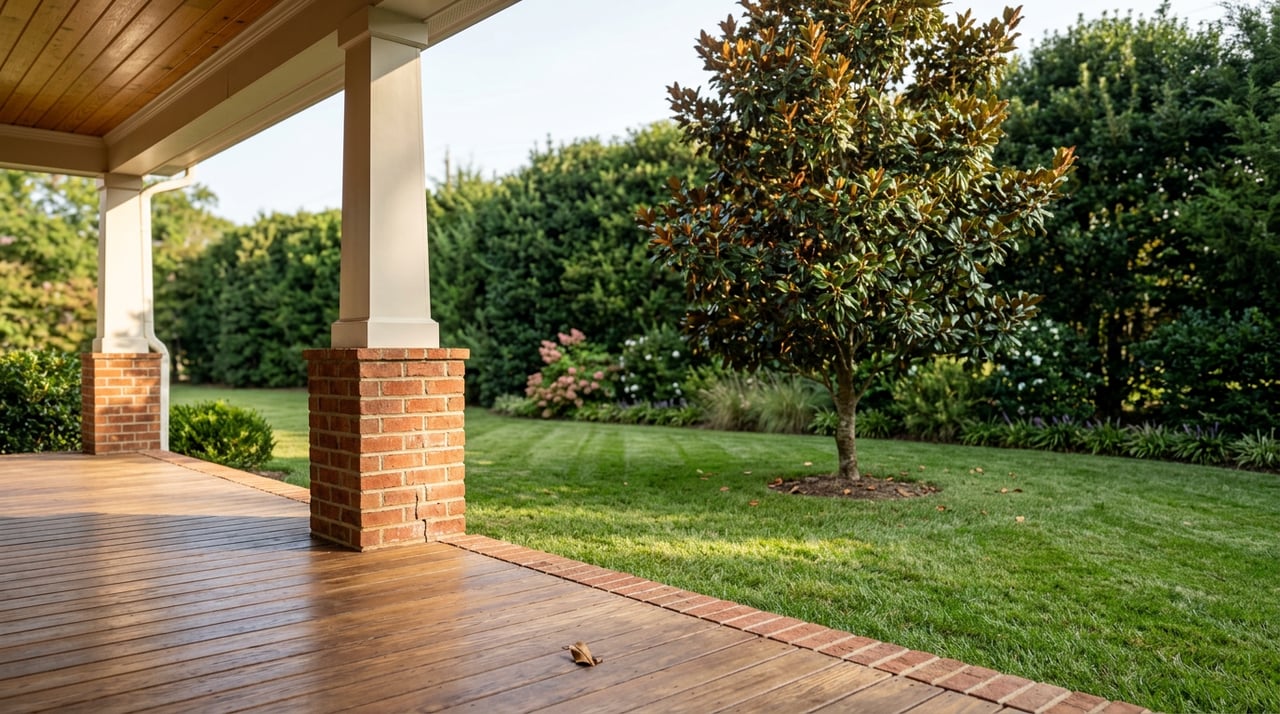
The creek also decided what the springhouse will look like. The structure stood in two forms over the years. TownSquare's board chose to rebuild the earlier one:
"An open gazebo allows floodwater to pass through rather than battering solid walls."
The design dates to about 1885. The original octagonal brick foundation survived Helene, and the original galvanized roof has been found and cataloged. The rebuilt springhouse will look the way it did in the Gilded Age because that version holds up best in a flood.
Why the Pool Comes Back as a Garden
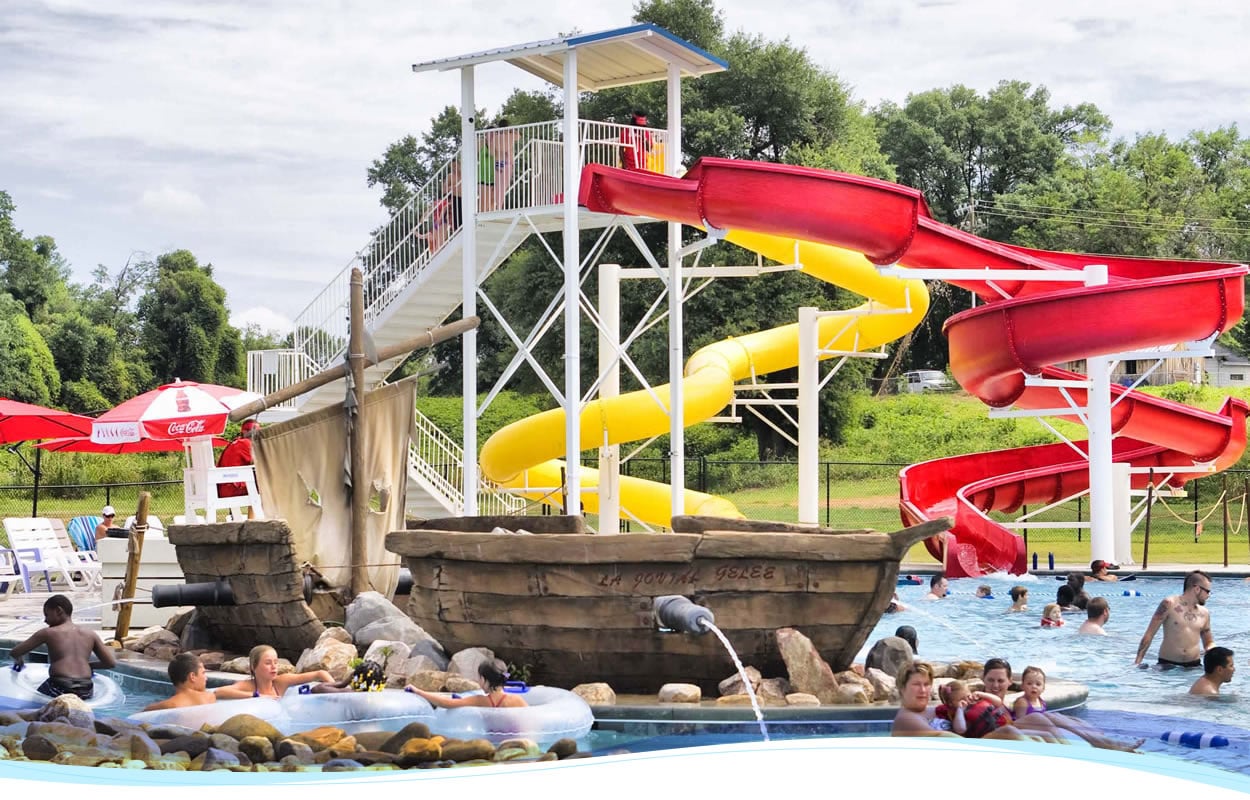
The pool was the largest thing anyone ever built at Chick Springs. The Bull family's 1927 pool measured 350 by 150 feet and was 15 feet deep under the diving board, with room for 400 to 500 swimmers. A dance pavilion and an amusement park stood nearby. The Chick Springs history site describes the mid-century years this way: a tin slide that worked better with water splashed on it, a high dive, a concession stand, a jukebox, a shag dance floor, bands playing on the sand out back, and Danny Bull giving swimming lessons. The same account says the pool was segregated, and that Black families living within sight of the property were not allowed in.
The sources disagree on when the pool closed. One TownSquare history article says it was drained in 1972. The Chick Springs timeline says it had closed by the late 1970s, and some residents remember swimming there in the summers of 1976 and 1977. Around that time, the Taylors Garden Club put up historical marker No. 23-13 at the site. The marker was later stolen, and the property ended up behind a fence.
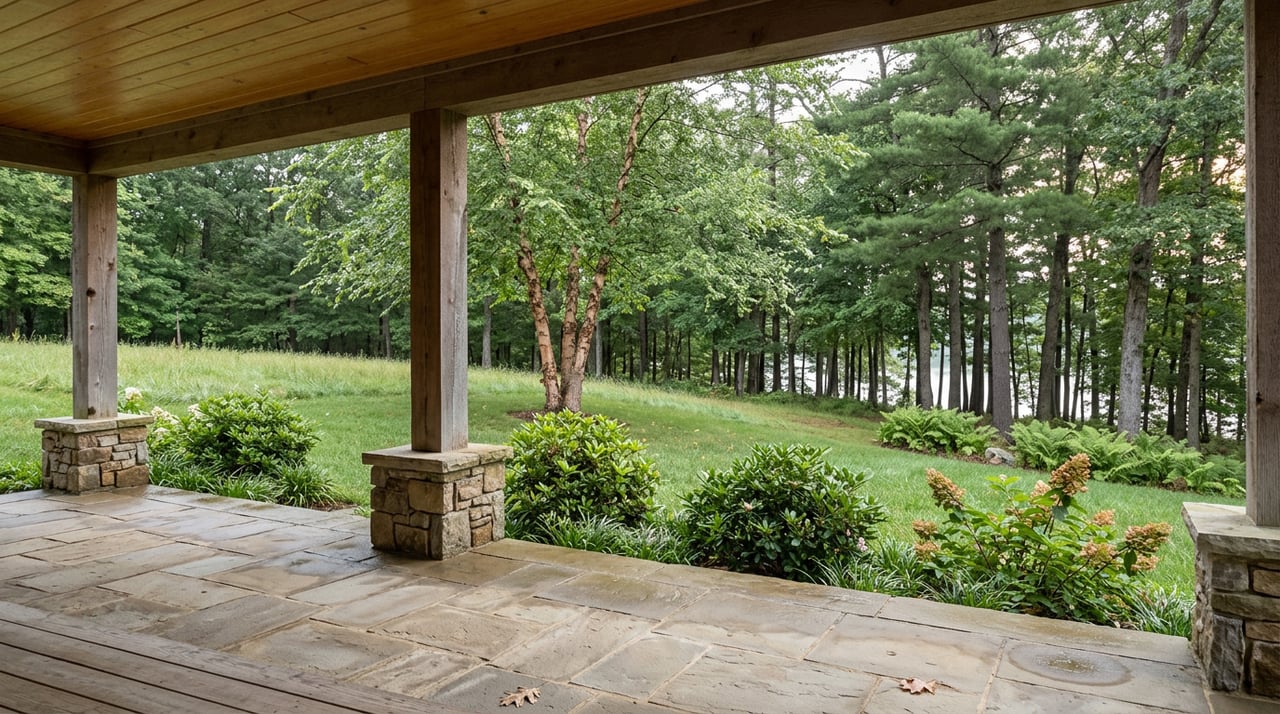
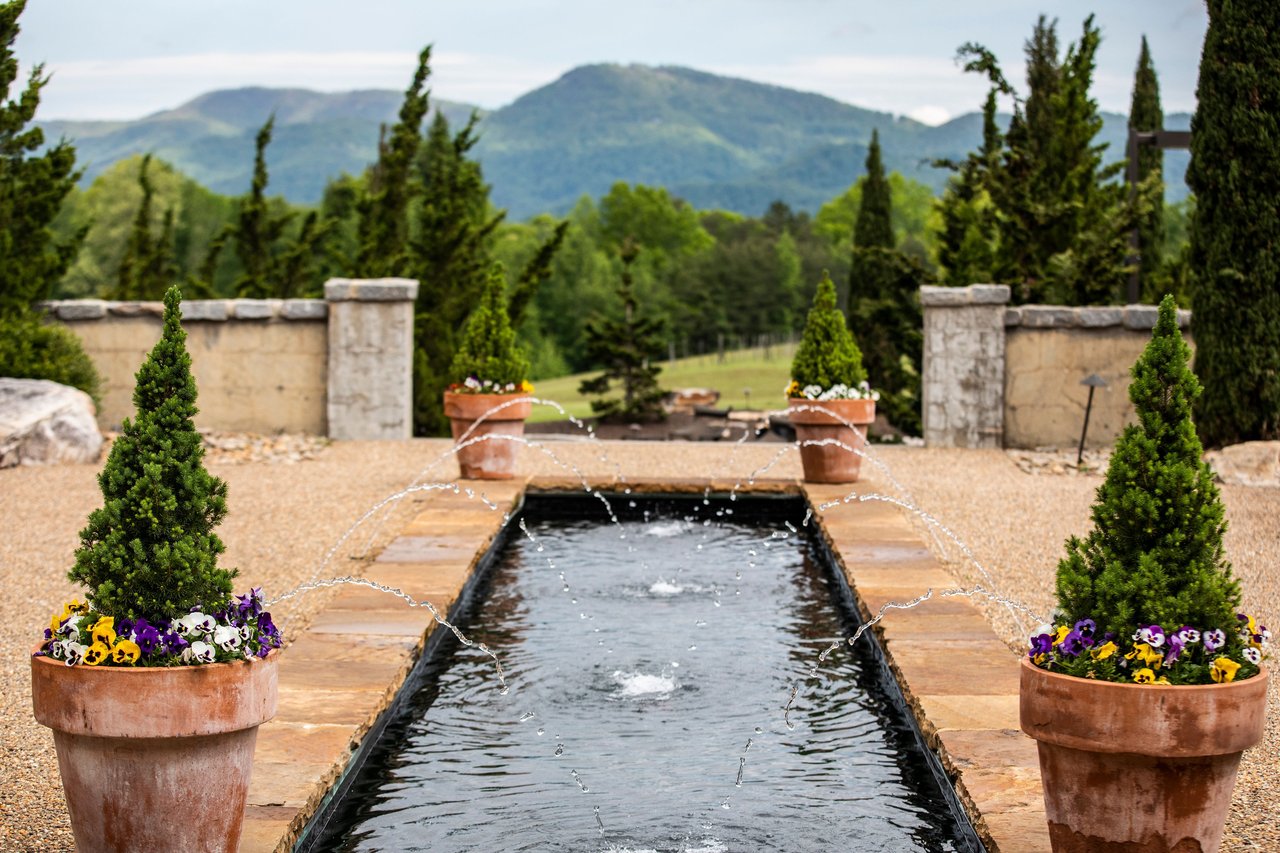
The FAQ answers the question TownSquare says it hears most. The former pool area is part of Phase 3 and will become a garden space with an arbor. TownSquare states that "a public swimming facility is not viable for an organization of our size" and says the pool's history will be told on site. The plan also brings back ornamental gardens near the springhouse and rebuilds footbridges over Lick Creek where the original stone abutments still stand. The park TownSquare describes is a passive one, meant for walking, reading signs, picnics, school field trips and quiet time, with planned dawn-to-dusk hours.
How Far the Money Has to Go
Landscape designers gave a rough estimate of about $1.7 million for all four phases. TownSquare says plainly that this is not a bid. The preservation consultant's estimate for rebuilding the springhouse alone is $110,500, which is also not a bid. So far the organization has raised more than $10,000 from donors, which paid for the Existing Conditions Report and the master plan. It also received about $14,000 in seed money from the Chick Springs Historical Society, which worked on conservation at the site starting in 2005 before it wound down.
None of the money being raised now is for construction. According to TownSquare's FAQ, current fundraising pays for the work that has to come before anything is built:
- Talks with Greenville County about parallel parking on Dan Bull Road
- Consultation with the U.S. Army Corps of Engineers about variances certain improvements may need
- Environmental review with Blueline Environmental, the firm that consulted on the original deed restrictions
- Moving from the conceptual master plan to engineering drawings for Phase 1
Fundraising for Phase 1 construction starts only after that work is done, and TownSquare says the full plan "will take years to realize." The most recent dated Chick Springs article on TownSquare's site is the March 27, 2026 recap of the gathering. All of the money stays with the project. Chick Springs Society memberships and Chick Springs Fund gifts go into a dedicated account that can only be spent on Chick Springs. Treasurer Michael Horne, CPA, manages the account, and TownSquare posts its financials at the end of each year.
Seeing It Before It Opens
The site is closed to unaccompanied visitors because the terrain isn't safe without a guide. TownSquare does offer guided walks to see the spring, the springhouse foundation and the grounds. To set one up, email Alex Reynolds, TownSquare's president, at [email protected].
The Chick Springs Society launched at the March gathering. Annual memberships run from $25 to $1,000, and members get progress updates and invitations to Society events. At the gathering, an attendee said they hoped future generations could picnic and play in the creek there.
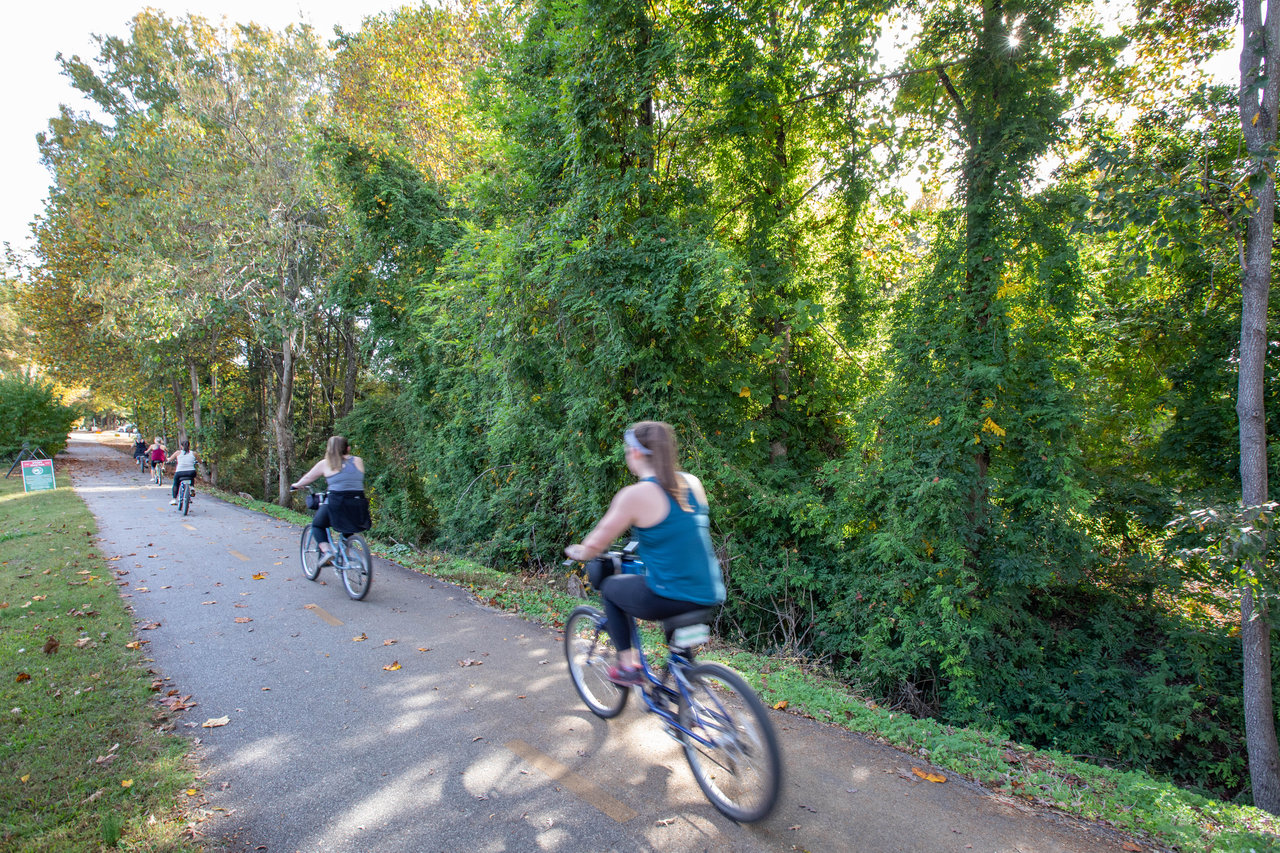
The plan's longest-range goal is a connection to a future Enoree River Trail. For now, that trail is still an idea. In 2016, the Greenville News reported that Greenville County Rec would lead a proposed Chick Springs to Taylors Mill segment. That article said the route might eventually follow the Enoree toward Corey Burns Park and the Swamp Rabbit Trail, and warned the process could take more than a decade. The most recent regional transportation plan lists a "City of Greer and Taylors Greenway" with $25,000 for planning in fiscal year 2027 and no construction funding. The first trails anyone walks at Chick Springs will run along Lick Creek inside the site itself.
At Nest Realty- Greenville, South Carolina, we follow projects like Chick Springs because the history behind a place shapes how a community grows. If you book a guided walk this fall and want to talk about what's changing in Taylors, Get Started Now.